introduction: in the context of thailand's rapidly growing digital demand, the energy consumption of computer rooms (data centers) has become a dual concern for operating costs and sustainable development. from the perspective of technical application, this article analyzes the practical path of green energy-saving technology in the construction of computer rooms in thailand , and calculates energy-saving benefits through examples to provide quantitative reference for project decision-making.
thailand's climate is dominated by high temperature and humidity, and cooling energy consumption accounts for a significant proportion of the total energy consumption in the computer room. grid load, power consumption peaks and valleys, and land layout restrictions make the construction of computer rooms must take into account energy efficiency, reliability, and local adaptability, making it an inevitable choice to promote the implementation of green technologies.
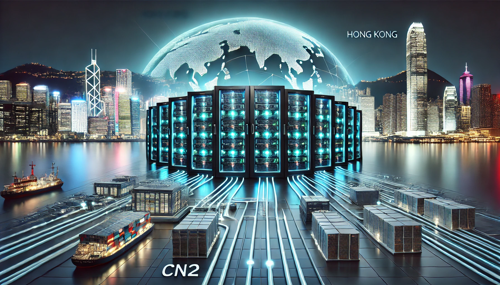
in thailand's computer room projects, common green energy-saving technologies include high-efficiency refrigeration and free cooling, direct liquid cooling, heat recovery and waste heat utilization, computer room energy efficiency management (dcim), ups and power distribution optimization, hybrid energy supply solutions combining renewable energy, etc.
high-efficiency cooling (such as cooling tower optimization, free cooling) and direct liquid cooling can significantly reduce cooling power consumption, especially for high-density racks. reasonable airflow management and thermal division configuration can help reduce the cooling station load and overall pue value, and improve system stability.
deploying dcim and real-time energy consumption monitoring enables fine-grained management of temperature, airflow and load. power distribution and ups efficiency optimization, power factor correction and modular redundancy design can reduce conversion losses, improve system utilization, and reduce long-term operation and maintenance energy consumption.
thailand has abundant solar resources. rooftop photovoltaics, distributed power generation and energy storage combined with ppa or microgrids can alleviate the pressure on the power grid and reduce carbon emissions. combining redundancy and demand response strategies to achieve smooth access and highly reliable operation of renewable power.
example calculation (for reference): assume 1 mw it load, pue=1.8 before transformation, and pue=1.3 after transformation. energy saving = 1 mw × (1.8-1.3) × 8760 h = 0.5 mw × 8760 h ≈ 4,380 mwh/year, accounting for approximately 27.8% of the total energy consumption. based on the example grid emission factor of 0.6 kgco2/kwh, approximately 2,628 tco2/year can be reduced. specific economic recovery needs to be evaluated on a case-by-case basis based on project capital expenditures and local electricity prices or energy consumption costs.
during implementation, load and heat map assessment should be prioritized, liquid cooling or free cooling technology should be piloted in stages, and dcim should be used to monitor and verify pue improvements. taking into account thailand's local climate, power consumption flexibility and regulatory requirements, we design an energy-saving solution that takes into account reliability and maintainability.
summary and suggestions: in the construction of computer rooms in thailand, systematic use of green technologies such as efficient refrigeration, liquid cooling, energy efficiency management and renewable energy can achieve significant reductions in energy consumption and carbon emissions. it is recommended that project parties use data-driven decision-making, implement in stages, combine local resources and policies, and monitor regularly to ensure maximization of long-term benefits.
- Latest articles
- Korean Group Website Advertising Strategy, Local Platform Selection And Conversion Rate Improvement
- Network Interconnection And Routing Practice Of Hong Kong Cloud Server Cn2 In Multi-cloud Architecture
- From Logs To Traceability, Tracking And Analysis Methods After Tencent Cloud Hong Kong Server Was Attacked
- Stable And Cheap Malaysian Server For Live Video Broadcast. Key Points Of Delay And Jitter Control
- Sharing The Steps, Risks And Implementation Experience Of Enterprises Migrating To Cambodian Servers Alibaba Cloud
- Complete Huawei Cloud Singapore Server Instance Creation And Environment Configuration From Scratch In One Hour
- Practical Guide To Building A Korean Cloud Server And Designing A Data Backup And Disaster Recovery Center
- Operator Comparison Analysis Of Latency And Stability Of Vietnam Vps Cn2 Different Packages
- How To Choose A Thai Cloud Server? Comparison Of Manufacturer Reputation, SLA And Technical Support
- How To Calculate Elastic Expansion Costs In The Hong Kong Server Hosting Price List Based On Business Peaks
- Popular tags
-

Common Questions About Second-Hand Server Transactions: Practical Answers To Whether It’s Illegal To Sell Servers In Thailand
This article is titled “Common Questions About Second-Hand Server Transactions: Is It Illegal to Sell Servers in Thailand?” It outlines the practical aspects and risk control recommendations for buying and selling second-hand servers in Thailand from the perspectives of law, data privacy, import/export regulations, and compliance. -

The Latest Guide Teaches You How To Judge The Stability And Latency Of Crossfire’s Thailand Server
this guide introduces how to judge the stability and latency of crossfire's thailand server. it includes testing tools, key indicators and optimization suggestions to help players choose a more stable game line. -
Revealing The Victim’s Story Of Thailand Computer Room Fraud Case
this article reveals the stories of victims of thailand computer room fraud cases, discusses the methods and preventive measures of fraud, and helps readers to be more vigilant.